Sun Jar Video

The Sun Jar stores sun light. Literally, it collects and stores sunshine, so that you can use it at night. The Sun Jar was voted Eco Friendly Gift of the Year 2007!

Features:

  • Automatic Switch On -  The Sun Jar switches on and off automatically when it gets dark or light, it has a light sensor, and will only illuminate in a dark environment.
  • Manual Off Switch – If desired use the switch to turn the Sun Jar off at night and conserve battery life.
  • Charging your Sun Jar – It couldn’t be easier: leave the Sun Jar outside or in a sunny window in direct sunlight for several hours to charge.
  • The Battery – When the battery loses its ability to store energy, simply replace it with a standard AA rechargeable battery.
  • Sun Jar can be used both indoors or outdoors and has a weatherproof seal!
  • The battery lasts for 5 hours on one charge.

Free Sunlight forever! Sun Jar stores up sunshine for the night-time.
The Sun Jar stores sun light. Literally, it collects and stores sunshine, so that you can use it at night.

http://www.ecohip.co.uk/energysavingproducts/sun-jar.html

Posted in Home & Garden, low impact living | Tagged , , , , , , , , , , , , , | Leave a comment

Where does the plastic we use end up?

Where does the plastic we use end up? Sure some of it ends up in the landfill sites (those are filling up fast), some is used in waste to energy plants that create electricity, some is reused, some is recycled and some of it just gets lost or seems to disappear – where does it go? We may have found out where it is ending up. If you look in the right places in the oceans you’ll find huge floating rafts of plastic that has accumulated over the years and still is accumulating.

The most prominent is the so called Pacific ocean garbage patch – and it is currently the size of Africa and growing daily. Every Ocean has the same issue – and that’s just the stuff that floats. Imagine the stuff that sinks. If you look at the water in our oceans today under a microscope you will see finely ground up plastic – almost invisible to the human eye from the deepest oceans to the very top.

If you go to the Antarctic and drill through the ice you’ll find in certain places a thick layer of brown smelly goo just underneath the ice. If you analyse this you’ll find every chemical known to man and a few new combinations that have never been made – DDT, PCBs etc are all there and they are collecting in our oceans. Can you wonder why our fish don’t want to live there anymore?  If we continue to rely on industrial plastics then the future is gloomy to say the least.

So how can we reduce the amount of plastic we use?

  1. Buy your food locally from farmers markets/farmers directly
  2. If you have to use the supermarkets then choose unpackaged products where ever possible
  3. When ever you see an over packaged product on sale – refuse to buy it and tell the customer service team
  4. Ask shops and stores to not use secondary plastic carrier bags – if a carrier is essential then use a recycled paper one or even better use a cloth one that’s already been recycled.
  5. Don’t buy bottled water – buy a filtration jug and save money in the process or buy your water in glass bottles – there are many good stainless steel refillable water bottles on the market today
  6. Make your own bread – without plasticisers – yes the put plastic/polymers in bread to make it soft.
  7. Make your own salad dressings rather than buy them from the supermarket – 2 parts olive oil to 1 part lemon/wine vinegar plus seasoning works well and saves a fortune
  8. Grow your own salad and vegetables
  9. If you do buy plastic items see if you can reuse them.
  10. Take your own mug when you get a coffee at a high street outlet – they might even give you money off.
  11. Clean with baking soda and vinegar instead of cleaners packaged in plastic
  12. Use bar soap to wash your dishes. Dr. Bronner’s is perfect.
  13. Do not use air fresheners. Light a candle or incense instead.
  14. Buy milk in paper cartons.
  15. When ordering drinks, say “no straw please!”
  16. Don’t use plastic cutting boards. Use wood or glass.
  17. Make your own yoghurt
  18. Send junk mail back to sender saying not required
  19. Use reusable plastic food storage boxes for storing excess food
  20. Buy cheese from the deli and ask for it in paper bags rather than prepackaged items in plastic
Posted in Home & Garden, low impact living | Tagged , , , , , , , , , , , , , , , , , , , | Leave a comment

Do Mobile Phones cause harm to the brain

Do Mobile Phones cause harm to the brain?

The arguments continue to rage around the safety of mobile phones (cell phones) and we are all spending more time in contact with these really useful devices. Smartphones, like the IPhone and Samsung Galaxy, are encouraging even more ‘contact-time’.  The debate continues when one study comes out and says there is no evidence of harm done by the radiation and then another comes about and says there is evidence of harm even cancer.

Continue reading

Posted in radiation | Tagged , , , , , , , , , , , , , , , , , , , | Leave a comment

EcoHip Hair Colouring Guide

EcoHip Hair Colouring Guide

Modern hair colouring owes its very existence to French chemist Eugene Schuller, who in 1909 pioneered the use of the chemical paraphenylenediamine. Colouring hair has become commonplace and it is estimated that in excess of 75% of all women colour  their hair but the range of chemicals has increased. Hair colouring works because of the chemical (peroxide, ammonia etc) reactions between the hair and pigments.

Don’t miss your 10% Discount Voucher.

Hair is made of mostly keratin, the same protein found in skin and fingernails. The natural colour of hair depends on the ratio and quantities of two other proteins, eumelanin and phaeomelanin. Eumelanin is responsible for brown to black hair shades while phaeomelanin is responsible for golden blond, ginger, and red colours. The absence of either type of melanin produces white/gray hair.

People have been colouring their hair for thousands of years using plants and minerals. Some of these natural agents contain pigments (e.g., henna, black walnut shells) and others contain natural bleaching agents or cause reactions that change the colour of hair (e.g., vinegar). Natural pigments generally work by coating the hair shaft with colour. Some natural colorants last through several shampoos, but they aren’t necessarily safer or more gentle than modern formulations. It’s difficult to get consistent results using natural colorants, plus some people are allergic to the ingredients.
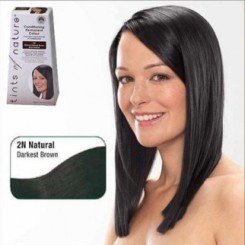
Tints of Nature produces outstanding results whilst protecting and caring for your scalp and hair as naturally and as gently as possible. Contains organic aloe vera, comfrey extract and roman chamomile to soothe, calm and heal. Maintains hair’s natural moisture and protein balance. 100% grey coverage.
Safe Tints of Nature Hair Colourant

Contains all organic ingredients:

  • Aloe vera to moisturise and soothe the scalp during the colouring process
  • Comfrey extract for its soothing and healing properties
  • Roman chamomile, which is rich in natural azulin, renowned for its calming and healing
  • Orange extract to smoothe and boost shine
  • Grapefruit extract, a natural anti-dandruff agent

Ingredients:

Colour Gel: PEG-2 Soyamine, Aqua, Cocamide DEA, Alcohol Denatured, Oleic Acid, Propylene Glycol, Ethanolamine, Hydrolysed Wheat Protein, Parfum, PEG-7 Glyceryl Cocoate, Certified Organic Symphytum Officinale (Comfrey Extract), Certified Organic Aloe

Check out our Tints Instruction Leaflet

We also have a very good Self Colouring Step by Step Guide

Ecohip.co.uk Discount Voucher

Posted in Hair Care, Health & Body | Tagged , , , , , , , , , , , , , , , , , , , , , | Leave a comment

Growing Salad in Containers

Many gardens today are small and city gardens are often little more than a courtyard but it is still possible to grow a good selection of salad and small vegetables.

Herbs, salad vegetables and many fruits thrive in pots and containers. They are perfect for beginnersd and those with small gardens. There are all shapes and sizes of pots and containers and even some surprising ones. Check recycling yards – old sinks, toilets, wheelbarrows, coal scuttles, yoghurt pots, fertilizer drums in fact anything that can hold compost could be suitable.

1. Choose suitably sized containers

Salad vegetables like raddishes, beetroot and lettuce tend to have shallow roots so you might need only a couple of inches soil depth. Carrots and deep rooted vegetables might need a foot or more. Some crops like courgetes like to spread so you’ll need a larger area. Potatoes grow very well and can often be grown in columns 4 or 5 feed high for super yeilds. Bean need more depth and plenty of organic material as they are hungry plants and need lots of nutrients.


2. Water, Water, Water

Pots will dry out quickly and plants will die. So make sure you have the facility to water your pots. There are water retaining gels and high tech solutions but a simple watering can is a great place to start.

3. Good drainage

It seems counter intuitive that while plants need water they will die if they get too much – so you will have to make sure that your pots have adequate drainage so they don’t get waterlogged.

4. Compost

Compost is a complex subject but get along to your local garden centre and buy a bag – 20 litres will cost about £5 or so and don’t forget growbags act as a container as well.

5. Regular feeding

Most plants only need feeding once a week and there are many liquid feeds in the garden centre that are suitable for all plants.

6. Good positioning

The positioning of plants in containers is critical and be prepared to move them if you need to. Full sun and wind are the main issues and some plants like neither. Indirect sunlight is often best and some plants even thrive in the shade so check out different varieties.

Posted in Food Prices, Home & Garden | Tagged , , , , , , , , , , , , , , , , , , , | 4 Comments

Growing your own food in a big city

Growing your own food in a big city

Following on from the great response we had to the article a few weeks back about food price escalation we had many people ask us if it was possible to grow your own food in a big city or in a small back yard/garden. Many people are waking up to the idea that they can grow their own food.

The very clear answer is yes but the question is then what to grow? Continue reading

Posted in Home & Garden, low impact living, Videos | Tagged , , , , , , , , , , , , , , , , , , , , , , , , , | Leave a comment

Tanning Safely

Tanning Safely – possible?tanning safely ecohip.co.uk

Tanning begins the moment you step out into the sun for most people. As UV rays penetrate the skin, it starts to break down DNA in the body (not a good start). The body’s response to this damage is to produce melanin. As sun exposure increases so the levels of Melanin increase making the skin appear darker. If you see someone who has had extensive exposure to the sun and hence high levels of Melanin then you can also assume that they have potentially higher levels of DNA damage to the skin. Continue reading

Posted in Health & Body | Tagged , , , , , , , , , , , , , , , , , , , , | 1 Comment

Food Pesticides and Science

Pesticide Residue

The UK is probably 5-10 years behind the USA in terms of recording data regarding the amounts and types of pesticide residue found in our food supply. The following statement was made in the 2009 report, published in June 2010:

Continue reading

Posted in Health & Body, Videos | Tagged , , , , , , , , , , , , , , , , , , , , , , , | 1 Comment

Sleeping Soundly

sleep ecohip.co.ukRoughly 30% of people will suffer with sleeping disorders annually and many are prescribed the (frequently addictive) sedative hypnotic medicines. Sleep is poorly understood by most people and is critical if you want to stay well. Lack of sleep can directly cause phycotic episodes and trigger other health problems.

Medical books list more than 80 different sleep issues including insomnia, snoring, bad dreams and narcolepsy. Many sleep issues are temporary (for example individuals with new babies), however they may also be an issue which plague you for a long time.

Most adults need between 7 and 8 hrs sleep each night, less as they age. Some may be able to manage on as little as 3 hrs/night. As you get older the tendency is for you to require less sleep. Continue reading

Posted in Health & Body, sleep | Tagged , , , , , , , , , , , , , , , , , , , , , , , , , , , , , , , | 1 Comment

Tips on Cleaning without chemicals

cleaning without chemicals ecohip.co.ukTips on cleaning without chemicals

By Chemicals we are refering to chemicals that are harmful, ecologically persistent and highly toxic.

Cleaning without chemicals in The Kitchen

This formula gets rid of your stains in several minutes. Just scrub and rinse it off with vinegar and hot water:
1/2 cup of borax
1/2 cup baking soda
8 drops of rosemary, eucalyptus or tee tree essential oils.
1/2 cup of vinegar for rinsing
Combine the borax, baking soda, and essential oils in an airtight container and shake well to blend. Sprinkle a small amount of the powder into the sink and scrub with a damp sponge. Rinse the sink with vinegar, then with hot water. Continue reading

Posted in Cleaning Without Chemicals | Tagged , , , , , , , , , , , , , , , , , , , , , , , , , , | 1 Comment